Posts Tagged ‘quoting’

Digital imaging for quoting accident repairs

Monday, November 24th, 2008

Digital Imaging

With the ever increasing demand by insurers for assessments by digital imaging, here are a few tips from an experienced assessor on this subject.

The No 1 Cardinal Rule is “If you could not quote from the photos how do you expect the assessor to assess the damage from these photos.”

Good quotes and good photos get proper and fair assessments.
It saves your valuable time just to take a little more time initially taking proper and sufficient numbers of photographs than having to be requested by the assessor to send more because they can not clearly see all the damage you have quoted. Digital photography is quick and easy, just click & save.

Camera Settings:

Some very high quality digital cameras are on the market today some boasting 8 megapixels or more.For digital images for transmission over the internet, high resolution settings are DEFINITELY NOT THE WAY TO GO.
High resolution is fine if you want to print high quality photos; however these take a large slice of computer memory and take a long time to send.  In some cases services will not accept large files and your emails will be rejected. There is little or no difference in the detail of the image seen on the computer screen between high and low resolution. For the purposes of images with quotes, settings of less than 1 megapixel are quite adequate.  (the setting we use is 640×480)  These will transmit quickly and take up much less memory on your computers hard drive.
The resolution setting on all digital cameras are easily adjustable.

Photos of the Damage

Approach the photography in the same way you look at the vehicle and the damage when you write you quote.

Your photos should include:-

1. An overview of the whole vehicle. (the rego no if registered).
2. The vehicle badges to identify the model.
3. Compliance Plate, Paint Code (very important).
4. Engine & Transmission type.
5. Registration Label and Odometer Reading.

You are now ready for the damage in detail.

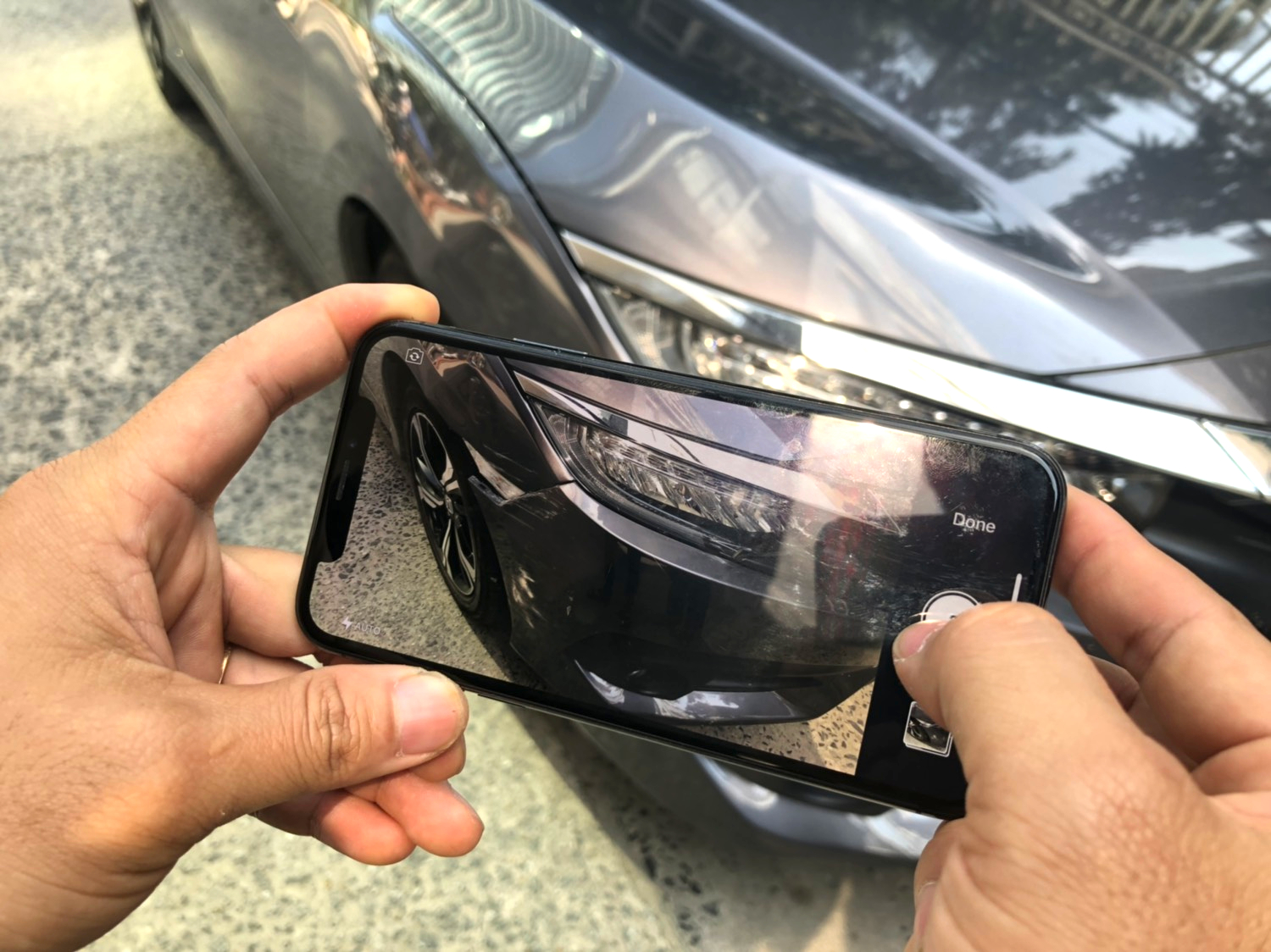
1. Overview of the damaged area.  Stand back just a little as you would when you first look at the damage.
2. Then take a closer photo which shows the damage in more detail. (Remember to let the camera focus before you click the shutter).  In some cases you may need to adjust the camera settings to MACRO for really close shots.
3. Take photos from different angles just as though you would move your angle of sight looking at the damage.
4. Where possible remove parts such as bar covers so the damage behind can be exposed.
5. Avoid using the flash as much as possible especially for close ups. (the image whites out with the flash)

It is suggested you photograph all the vehicles you quote, firstly for your own records, (helps if the owner tries to tell you “this damage was not there when we left the vehicle with you”) and secondly it will save more time if you don’t have to request the owner or third party to call back for photos.

And Remember:

The No 1 Cardinal Rule is “If you could not quote from the photos how do you expect the assessor to assess the damage from these photos.”

Follow these easy steps and you will save much of your valuable time and get the work authority much sooner

Off-site quoting the Crashzone advantage

Tuesday, September 30th, 2008

Crashzone off site quoting
Other estimating system such as Flexiquote have now realised the importance of not being tied to the one computer in your office. There is a need to be able to write a quote from an insurance customer care centre, to be able to write or fine tune quotes from home or even access quotes from overseas while on holidays. All this is possible with Crashzone along with several advantages that other estimating system can not offer you when it comes to off-site quoting.

* With Crashzone there is no expensive extra modules to buy
* No setup required
* No need to syncronise Crashzone as everything is done in real time.
* You don’t need to have your computer in the office running to be able to access off-site information
* No servers, networks, firewalls or hosting to worry about
* No need to install software so Crashzone can be used from any computer
* No limit for users have many people working on Crashzone at one time
* Can quote off site with any laptop, tablet, pocket PC or computer with internet access
* Print quotes from any computer attached to a printer
* Crashzone is a complete system with full functionality when used off site not just a limited function module

Crashzone the first free web based quote system and the obvious choice when it comes to off-site quoting.

Crashzone It’s Free

Guide to digital photo’s when quoting accident repairs

Monday, September 15th, 2008

Digital Imaging

With the ever increasing demand by insurers for assessments by digital imaging, here are a few tips from an experienced assessor on this subject.

The No 1 Cardinal Rule is “If you could not quote from the photos how do you expect the assessor to assess the damage from these photos.”

Good quotes and good photos get proper and fair assessments.
It saves your valuable time just to take a little more time initially taking proper and sufficient numbers of photographs than having to be requested by the assessor to send more because they can not clearly see all the damage you have quoted. Digital photography is quick and easy, just click & save.

Camera Settings:

Some very high quality digital cameras are on the market today some boasting 8 megapixels or more.For digital images for transmission over the internet, high resolution settings are DEFINITELY NOT THE WAY TO GO.
High resolution is fine if you want to print high quality photos; however these take a large slice of computer memory and take a long time to send.  In some cases services will not accept large files and your emails will be rejected. There is little or no difference in the detail of the image seen on the computer screen between high and low resolution. For the purposes of images with quotes, settings of less than 1 megapixel are quite adequate.  (the setting we use is 640×480)  These will transmit quickly and take up much less memory on your computers hard drive.
The resolution setting on all digital cameras are easily adjustable.

Photos of the Damage

Approach the photography in the same way you look at the vehicle and the damage when you write you quote.

Your photos should include:-

1. An overview of the whole vehicle. (the rego no if registered).
2. The vehicle badges to identify the model.
3. Compliance Plate, Paint Code (very important).
4. Engine & Transmission type.
5. Registration Label and Odometer Reading.

You are now ready for the damage in detail.

1. Overview of the damaged area.  Stand back just a little as you would when you first look at the damage.
2. Then take a closer photo which shows the damage in more detail. (Remember to let the camera focus before you click the shutter).  In some cases you may need to adjust the camera settings to MACRO for really close shots.
3. Take photos from different angles just as though you would move your angle of sight looking at the damage.
4. Where possible remove parts such as bar covers so the damage behind can be exposed.
5. Avoid using the flash as much as possible especially for close ups. (the image whites out with the flash)

It is suggested you photograph all the vehicles you quote, firstly for your own records, (helps if the owner tries to tell you “this damage was not there when we left the vehicle with you”) and secondly it will save more time if you don’t have to request the owner or third party to call back for photos.

And Remember:

The No 1 Cardinal Rule is “If you could not quote from the photos how do you expect the assessor to assess the damage from these photos.”

Follow these easy steps and you will save much of your valuable time and get the work authority much sooner.

Simon & Horst from Accident Repairs in QLD

Tuesday, April 8th, 2008

Simon & Horst from accident repairs crash zone

Thanks to Horst and Simon for getting involved with Crashzone the 1st free quote system.

How to write a quote in dollars in Crashzone - It’s Free

Thursday, February 14th, 2008